How SEO and Conversion Rate Optimisation Turn Search Traffic into Customers
SEO and conversion rate optimisation work together by bringing in organic traffic and helping more visitors become customers.
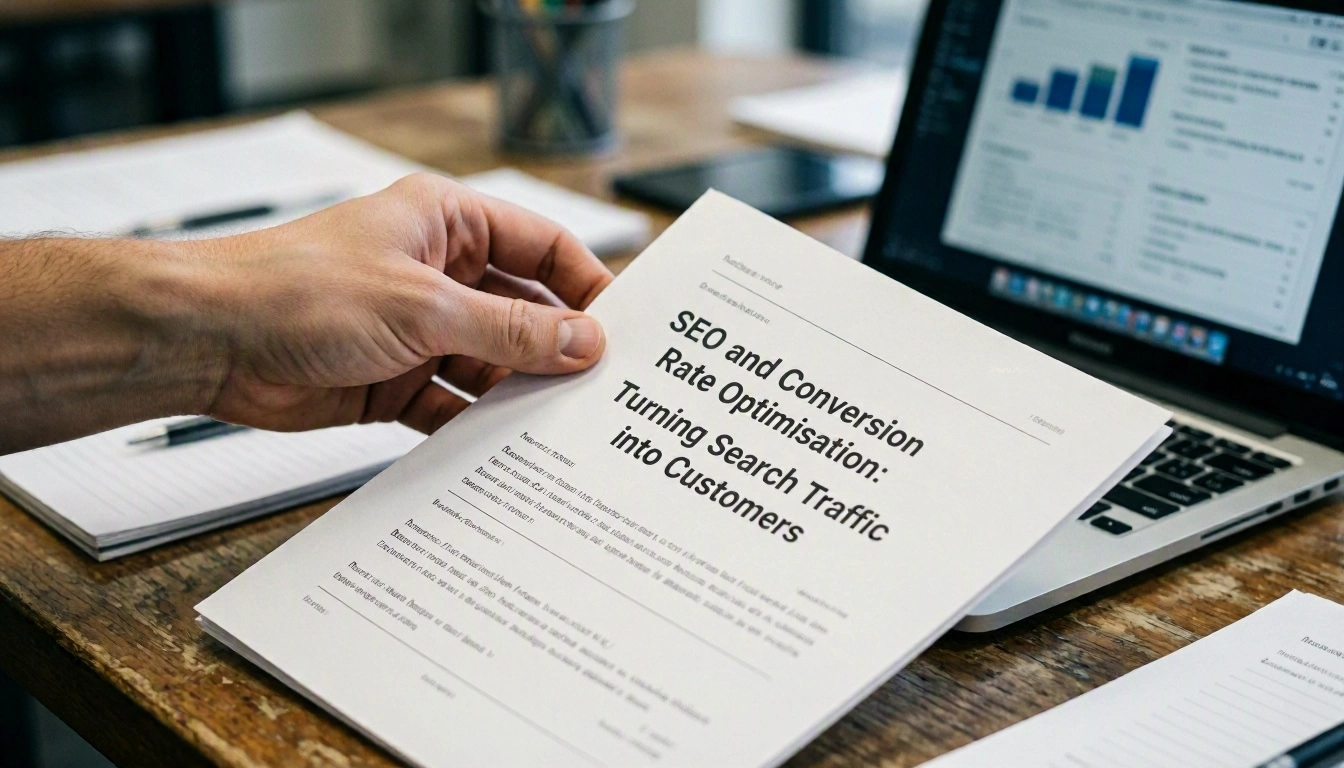
Turning visits into sales takes two linked skills. First, you need to show up in organic search.
Then your site needs to help people act. When traffic, page design, and user intent match, results improve.
That means better reach and more sales. It also cuts waste from the wrong visitors.
Understanding the Relationship Between SEO and Conversion Rate Optimisation
SEO and conversion rate optimisation are connected strategies. SEO brings organic traffic, and conversion rate optimisation helps turn that traffic into customers.
The link is simple. One brings people in.
The other helps them move toward action. These jobs shouldn't sit apart.
If a site ranks well, but feels hard to use, people leave. If a site converts well, but no one finds it, growth slows.
Good results come from strong search reach and a smooth site path. Good keyword targeting brings in people already looking for help.
Then clear pages help them keep going. Helpful copy, trust signs, and a strong call to action matter.
User experience matters here. Fast pages often do better.
Easy pages do too. People like pages they can read and use fast.
Conversion Rate Optimisation is part of website optimisation. It studies user behaviour analysis and removes friction.
Friction means little things that slow people down. Teams test headlines, forms, buttons, layouts, and proof blocks.
It often uses analytics tracking and A/B testing. A/B testing means comparing two page versions.
There's a clear business reason to use both. It makes measurable ROI easier to see.
ROI means return on investment. Teams can track rankings, visits, leads, sales, and revenue quality.
Our team checks technical and content fit first. Ranking pages should answer the visitor's need clearly.
That explains the relationship between SEO and CRO. One brings in good traffic, and the other helps it convert.
How SEO Strategies Improve Conversion Rates?
SEO improves conversion rates by targeting relevant keywords, improving site speed, helping mobile use, and matching content to user intent.
The first gain comes from better traffic quality. Good keyword research helps a business show for useful searches.
That means real interest, not light browsing. When pages match user intent, visitors arrive with a clearer goal.
Some searches show stronger buying intent. Pricing, service, and compare terms often lead to action faster.
site speed also matters a lot. A slow page can break trust right away.
Fast loading helps people stay on the page. It also gives them a smoother path.
That path may lead to forms, product pages, or contact steps. Mobile optimisation matters for the same reason.
If a page feels awkward on a phone, users leave. That can happen even with a strong offer.
Search engines also like mobile-friendly pages, so this fix helps reach and results.
Strong content is another big reason. On-page SEO shapes titles, headings, and page copy.
Those parts should answer real questions. Clear information cuts doubt and helps readers act.
Technical SEO helps too. It improves crawlability, page speed, and site structure.
Crawlability means search engines can read the site well. Together, these fixes improve the visit before and after the click.
Search engine optimisation can also build trust. Pages that rank well and load fast feel more solid.
Clear value helps too. Most gains come from many small fixes.
Big wins rarely come from one change. We often see SEO Services work best this way.
Content intent, page design, and conversion paths should be checked together. Analytics helps show what needs work.
That gives a clear answer. SEO brings the right people and removes barriers to action.
The Role of Conversion Rate Optimisation in Supporting SEO
Conversion rate optimisation supports SEO by making sites easier to use, lowering bounce rates, and helping users stay engaged.
CRO helps search performance after people land on a page. If visitors stay longer, it can support stronger results.
It also helps when they view more pages. Good use patterns often match what search engines want.
bounce rate is one useful clue. A high bounce rate does not always mean failure.
But it can show a poor match. The search intent and page feel may not line up.
CRO works to fix that gap. It can improve headlines, shorten forms, and clarify paths.
It can also place a better call to action. That helps people move forward instead of leaving.
Technical and content fit matters here. A page may rank well but still underperform.
That happens when the layout feels messy. It also happens when the message feels vague.
Conversion work helps close that gap. It supports landing page optimisation and better site paths.
Teams also test content blocks with A/B testing. That helps them learn what works best.
Data drives this work. Analytics tracking shows where users pause or leave.
It also shows device use and weak steps. For example, mobile users may reach a page, then fail to submit a form.
Fixing that issue can help both use and results. That is how conversion rate optimisation supports SEO.
It makes the site more useful. It also makes it more likely to meet visitor needs.
Optimising Landing Pages for Organic Traffic
Optimising landing pages for organic traffic means matching content to search intent, improving speed, using clear calls to action, and making pages work well on mobile.
Key Metrics to Track When Combining SEO and Conversion Rate Optimisation
Tracking key metrics like organic traffic, bounce rate, conversion rate, session time, and keyword rankings helps measure combined SEO and conversion rate optimisation work.
These metrics answer what you should track when combining SEO and CRO. Track the full path from search visit to business result.
When You Need Both SEO and Conversion Rate Optimisation Together?
Businesses need both SEO and conversion rate optimisation when they want more qualified traffic, better site use, and stronger online sales results.
In short, use both when you want traffic and conversion to rise together. That gives digital marketing a better chance of strong results.
Questions About SEO Services in Ballarat, Victoria
Related Resources
How Much Does SEO Cost in Ballarat? A Practical Pricing Guide
how much does SEO cost in Ballarat
What It CostsHow Much Does Ecommerce SEO Cost in Australia?
ecommerce SEO cost
Compared ToSEO Agency vs Freelancer vs In-House: Which Should You Hire?
SEO freelancer vs agency
How It WorksHow Long Does SEO Take to Work? A Realistic Campaign Timeline
how long does SEO take