
SEO Content Mistakes: Search Intent, Thin Pages and Duplication
SEO content mistakes involving search intent, thin pages and duplication can prevent useful pages from earning visibility. SEO-Ballarat.com.au audits the query, page purpose, content depth and duplication signals, then recommends practical fixes. Our approach connects content quality with user satisfaction and practical business goals.
How SEO Content Mistakes Prevent Pages from Meeting Search Needs
SEO content is weakened by search-intent mismatch, thin pages and duplicate content. A page can contain relevant keywords yet still fail when its purpose does not match what people expect from the search query.
Organic search rewards content that helps visitors complete their task. When content quality is poor, users may leave without finding an answer, comparing an option or taking the next step. Those weak signals can reduce the page's ability to earn and retain visibility in search results.
The SEO Content Mistakes We Check First
Our content audit starts with the target query, the pages appearing in search results and the purpose of the page being reviewed. We then assess keyword targeting, content quality and on-page SEO together.
This process shows whether a page is failing because of relevance, depth, duplication or a weak user journey. It also helps us separate a content problem from a technical or structural issue.
Mistake: Writing Without Identifying Search Intent
Search intent is the reason behind a search query, and content misses the mark when it answers a different reason. Informational intent seeks an explanation, commercial intent compares options, transactional intent supports an action, and navigational intent seeks a particular destination.
This mistake happens when keyword targeting starts with words alone and ignores user intent. The cost is wasted effort and weaker relevance because the ranking page does not satisfy the need behind the query.
We fix the issue by classifying the query, reviewing the search results and aligning the page purpose with the dominant intent. The copy, headings and call to action then support the same user journey.
Mistake: Covering a Query with the Wrong Page Type
Page type is the format that best serves a search need, such as a landing page, service page or blog article. A page can fail when its format does not resemble the useful results already meeting the query.
This happens when one page is made to target every variation of a topic. The cost is diluted relevance, unclear page purpose and a weaker chance of becoming the preferred URL in search results.
We compare the query with the existing results and choose the page type that fits the need. We may restructure the page, create a clearer service page or move an educational explanation into a blog article.
Mistake: Publishing Thin Content That Adds Little Value
Thin content provides too little useful information for the query it targets. A thin service page may name an offer without explaining who it helps, what it includes or what a visitor should do next.
This issue happens when pages are produced to fill a keyword list without adding original value. The cost can be low engagement, weak content depth and limited organic visibility.
We improve thin pages by expanding the information that readers need, adding relevant context and covering the topic with a clear structure. We remove filler and keep each section connected to the page purpose.
Mistake: Treating Short Content as Automatically Thin
Short content is not automatically thin when it fully answers the search intent and meets reader needs. Conciseness can improve clarity when the query requires a direct answer.
The mistake happens when content length is used as a substitute for completeness. The cost is unnecessary writing, slower reading and a page that becomes less useful through repetition.
We assess completeness, not word count alone. Our fix is to add missing information where it supports the query and remove sentences that do not improve relevance or understanding.
Mistake: Repeating the Same Content Across Multiple Pages
Duplicate content is repeated or nearly repeated information across pages, while near-duplicate content has small changes but serves much the same purpose. Page similarity becomes a problem when several URLs offer no clear reason to exist separately.
This happens when location, service or product pages are copied with only minor wording changes. The cost is unclear URL selection, weaker unique value proposition and difficulty deciding which page should appear in search results.
We review the overlap and select the strongest page for the topic. We then recommend content consolidation, meaningful differentiation or a clearer internal linking structure.
Mistake: Copying Manufacturer or Competitor Wording
Copied content repeats wording that readers can find elsewhere, including manufacturer descriptions or competitor content. Original content explains the subject through a distinct point of view and adds useful editorial differentiation.
This mistake happens when publishing is treated as transferring supplied text into a website. The cost is limited originality, weak content quality and fewer reasons for a visitor to choose the page.
We rewrite copied material around the audience, offer and page purpose. Our fix adds clear explanations, relevant context and original value without making unsupported claims.
Mistake: Creating Keyword Variants That Compete with Each Other
Keyword cannibalisation occurs when multiple URLs target the same search intent and compete for the same visibility. The problem is internal competition between pages, not simply the use of related words.
This happens when keyword mapping is missing or when new pages are added without checking the existing ranking page. The cost is divided authority, confused URL selection and inconsistent search performance.
We map each target query to the most suitable URL and check whether the pages have different purposes. We then recommend revising, linking or consolidating pages where the overlap is not useful.
Mistake: Optimising Text While Ignoring the Page Experience
On-page SEO includes the title tag, heading structure, internal linking, metadata and readable body copy. Text alone cannot fix a page that makes the next step unclear or difficult to follow.
This mistake happens when optimisation focuses only on inserting keywords. The cost is a disjointed page experience, weaker readability and a conversion path that does not match the visitor's needs.
We align the title, headings, metadata and internal links with the search query. We also review layout, readability and the call to action so the page supports both discovery and action.
Mistake: Leaving Out Evidence, Context and Clear Next Steps
Content credibility improves when a page provides supporting detail, useful context and a clear next step. Readers need enough information to understand the offer and decide what to do.
This mistake happens when copy makes broad claims without explaining the basis or relevance. The cost is lower trust, weaker user satisfaction and an interrupted user journey.
We add the detail that supports the page purpose and remove claims that cannot be supported. We make calls to action clear without forcing them into sections where they do not help.
How We Diagnose Search Intent, Thin Pages and Duplication
Our SEO content audit follows a structured review so each recommendation connects to a specific problem. We assess the page in its search context, not as isolated copy.
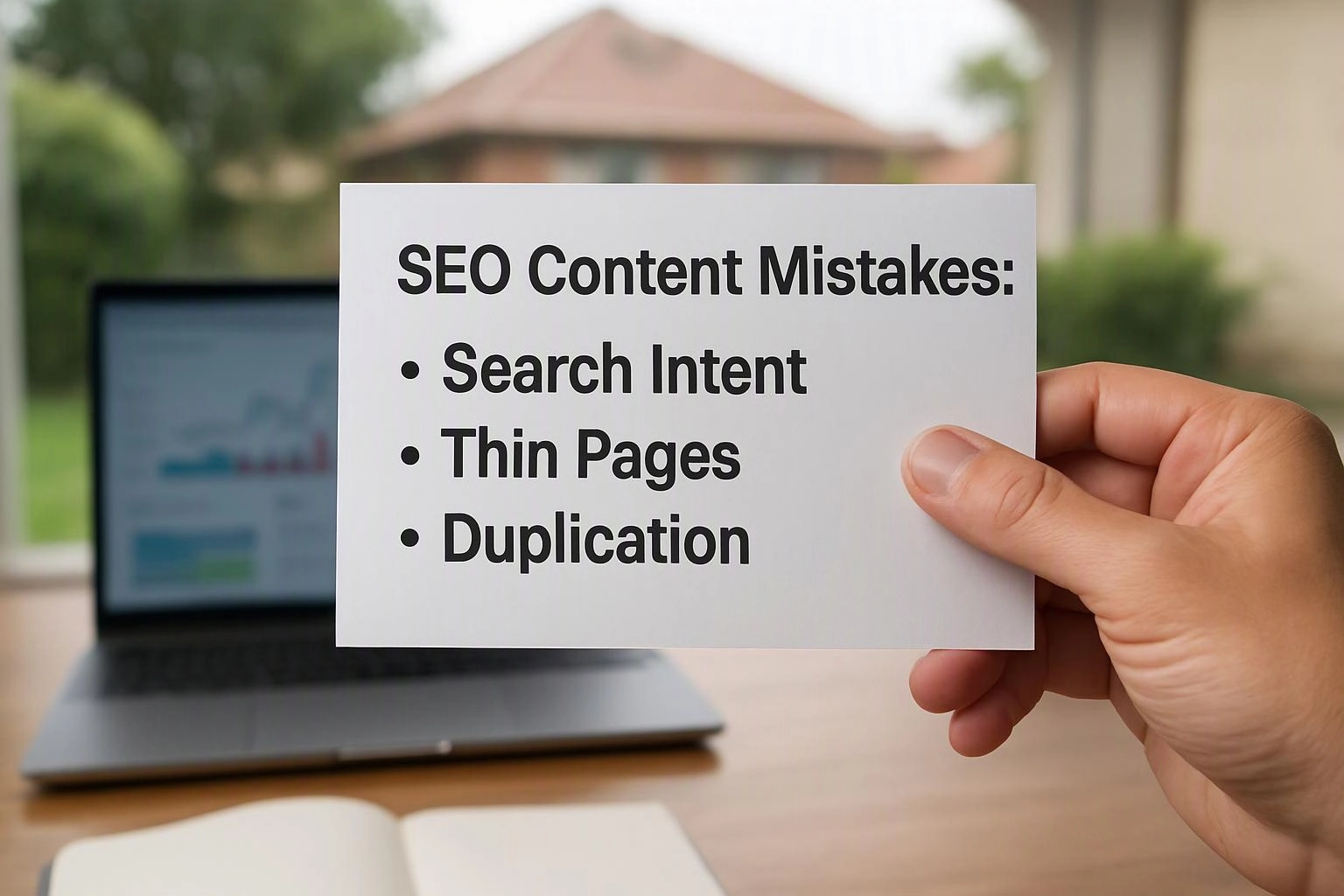
How the Main Content Problems Differ
These problems can appear together, but each one needs a different correction. The table separates the cause from the action we would usually consider.
| Problem | What it means | Recommended action |
|---|---|---|
| Search-intent mismatch | The page does not meet the need behind the query. | Change the page purpose, format or content to match the intent. |
| Thin content | The page offers too little useful information or original value. | Improve content depth and cover the reader's needs without filler. |
| Duplicate content | Several pages repeat the same or nearly the same information. | Differentiate, consolidate or clarify the preferred URL. |
| Keyword cannibalisation | Multiple pages target the same intent and compete internally. | Use keyword mapping and assign each query to the right URL. |
The right action depends on the page purpose, the search results and the amount of useful overlap. Combining pages is not always correct when each URL serves a genuinely different need.
What We Change When a Page Has These Problems
Our SEO Content Writing work turns the audit findings into a clear content brief. The brief defines the target query, page purpose, audience, supporting topics and desired next step.
We may restructure the page, improve its headings, expand useful explanations or remove repeated sections. We also use On-Page SEO to refine metadata, readability and internal links so the page fits the wider site.
When pages overlap heavily, we assess content consolidation and preserve the strongest information in a clearer URL. When the pages deserve separate purposes, we add meaningful distinctions instead of superficial wording changes.
When to Ask SEO-Ballarat.com.au to Review the Content
We can review content when the issue involves competing pages, unclear intent or a wider content strategy decision. A review is useful when changes have not solved the underlying problem.
What a Content Review Covers and How to Request an Estimate
A content review covers search intent, page purpose, content quality, duplication, keyword mapping, on-page SEO and internal linking. We use those findings to set content priorities and define the scope of work.
The estimate depends on the pages, the depth of the audit and the changes required. We can outline whether the work involves SEO Content Writing, page restructuring, content consolidation or supporting On-Page SEO.
Free Estimates Available for a clear review of your content needs. Use our contact page to request an estimate and describe the pages or search queries you want assessed.
Questions About SEO Content Mistakes
Can a page be too short without being thin content?
Yes, a short page can avoid thin content when it fully answers the search intent and meets reader needs. Content becomes weak when it leaves important questions unanswered, not simply because it uses fewer words.
Should duplicate pages be deleted or combined?
Duplicate pages should be combined when they serve the same purpose and offer no separate value. Pages should remain separate when each one meets a different search intent and has a clear reason to exist.
What is the difference between duplicate content and keyword cannibalisation?
Duplicate content describes repeated or nearly repeated information across pages. Keyword cannibalisation describes pages competing for the same search intent, even when their wording is not identical.
How do I choose the right page for a search query?
The right page is the URL whose purpose and format best match the search intent shown by the query and relevant search results. Keyword mapping helps assign that query to one clear ranking page.
What should an SEO content audit check first?
An SEO content audit should check search intent and page purpose first because those decisions guide content depth, keyword targeting and duplication reviews. The audit can then assess on-page SEO and internal linking.