Why Your Website Isn’t Ranking on Google: SEO Mistakes to Check
Website ranking problems usually come from indexing barriers, technical SEO errors, weak search intent alignment, poor content, insufficient authority or weak user experience. SEO-Ballarat.com.au checks these causes through SEO Audits and SEO Consulting, then sets out the corrective work.
Why Is Your Website Not Ranking on Google?
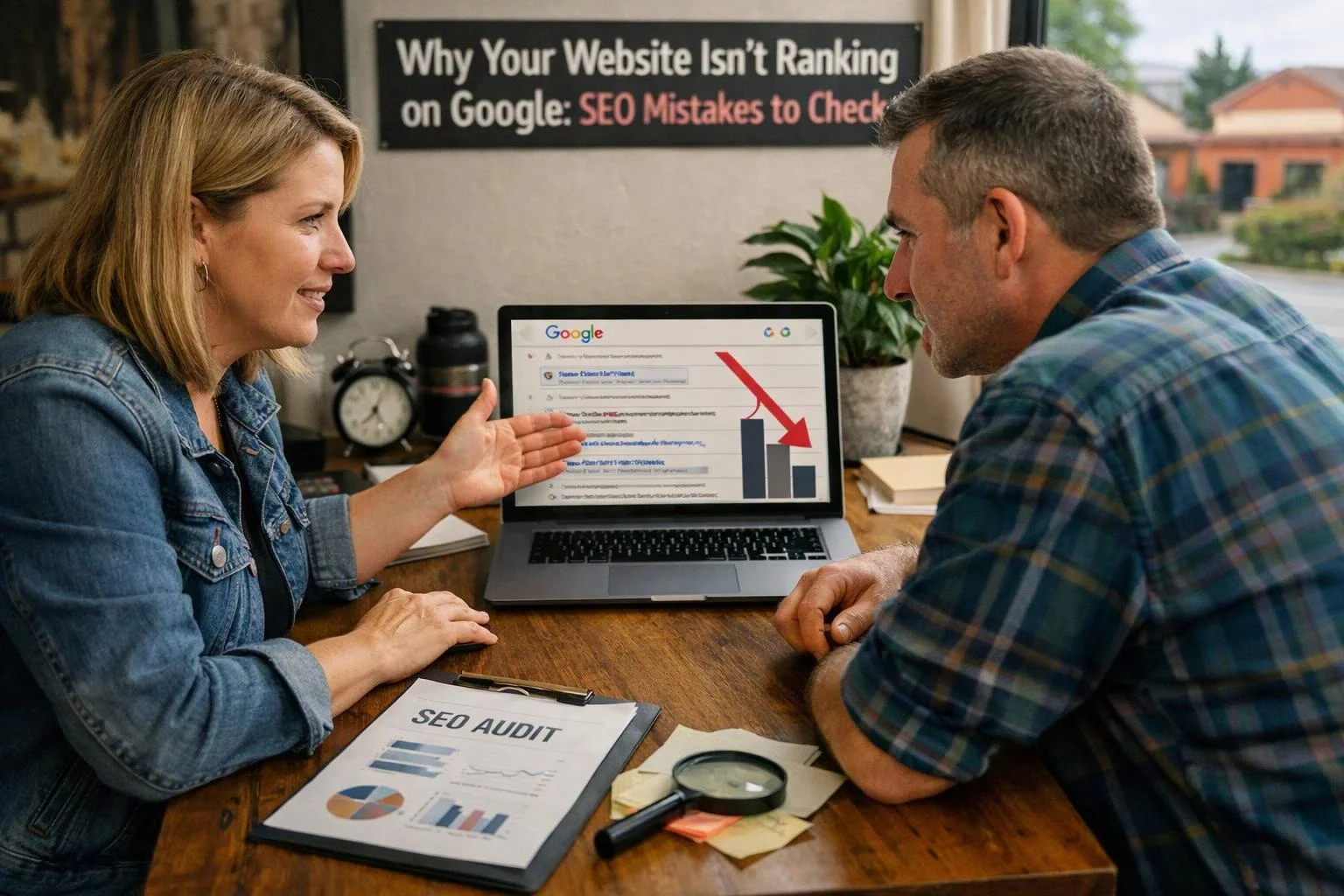
Google Search ranking depends on whether search engines can access, understand, trust and satisfy a page for a relevant search.
A website can be visible in organic search but still have weak search visibility for valuable queries. Our SEO diagnosis separates access, technical SEO, relevance, content quality, authority and user experience issues so the right problem is addressed first.
Check Whether Google Can Crawl and Index Your Website
Indexing checks show whether Google can discover, crawl and store the pages that should appear in search.
We use the available evidence from web crawling, Googlebot activity, index coverage and Google Search Console to trace where a page stops being visible. An XML sitemap supports discovery, but it cannot make a blocked or low-quality page rank by itself.
Mistake: Blocking Important Pages from Search Engines
Robots.txt rules, a noindex directive or an incorrect canonical URL can prevent an important page from entering search results.
This issue often appears after a website launch, template change or staging setup. The business cost is lost organic traffic and weaker index coverage for pages that support enquiries or sales.
We compare crawlability with the intended index state, correct conflicting directives and request reprocessing through Google Search Console where appropriate.
Mistake: Publishing Pages with Technical SEO Errors
Technical SEO errors include unsuitable HTTP status codes, broken links, redirect chains, incorrect canonicalisation and content that fails during JavaScript rendering.
These errors can leave search engines with incomplete, duplicated or inaccessible page versions. Mobile usability problems can also reduce the usefulness of a page for people searching on smaller screens.
We test status codes, redirects, links, rendering, canonical URLs and mobile layouts, then prioritise technical remediation by business impact.
Mistake: Targeting the Wrong Search Intent
Search intent describes what a person expects to find when using a query.
Informational intent needs an explanation, commercial intent needs useful evaluation details and transactional intent needs a clear path to action. A page can use a relevant keyword but still fail when its format, depth or offer does not match the search results.
We compare keyword intent with the current results, page purpose and customer journey, then adjust the landing page, content structure or target query.
Mistake: Creating Thin, Duplicate or Unhelpful Content
Thin content gives searchers little useful information, while duplicate content repeats substantially similar material across pages.
These problems can happen when pages are created from templates without enough unique value. The cost is reduced relevance, weaker conversion opportunity and content that does not answer the complete question.
We perform a content audit, combine overlapping pages where suitable, expand useful topics and add original information that supports the reader's decision.
Mistake: Missing the Main Topic and Supporting Entities
Keyword relevance improves when the page clearly covers its main topic and the related concepts a reader needs.
A vague title tag, weak heading structure or missing supporting entity can make the page difficult to interpret. A topic cluster helps connect related pages without forcing the same phrase into every paragraph.
We clarify the primary keyword, title tag, headings and supporting topics while keeping the language natural and useful.
Mistake: Ignoring Page Experience and Mobile Usability
Page experience affects how easily people can use and understand a page after selecting it from search.
Mobile-first indexing, Core Web Vitals, page speed and layout stability matter when pages are slow, shift during loading or make key content hard to use. Intrusive interstitials can also interrupt the searcher's task.
We review mobile usability and page behaviour, then recommend changes to loading, layout, media, scripts and page elements that obstruct access to the content.
Mistake: Expecting New or Changed Pages to Rank Without Monitoring
Google Search Console helps show whether a new website, URL or SEO change has been discovered and indexed.
New and changed pages can need checking after publication, particularly when a redesign changes URLs or templates. A ranking monitoring process helps separate normal movement from an indexing issue or a meaningful ranking drop.
We use URL inspection, indexing requests where suitable and ongoing checks to confirm whether the intended change reached search engines.
Mistake: Overlooking Internal Links and Site Structure
Internal linking connects related pages and gives search engines a clearer crawl path through the site.
Poor site architecture can leave an important page orphaned or buried beneath an unclear information hierarchy. Weak anchor text also makes the relationship between pages harder to interpret.
We map the site structure, locate orphan pages and improve internal links so priority content has a logical path from related pages.
Mistake: Relying on Weak or Unnatural Backlinks
Backlink quality depends on whether links come from relevant, trustworthy referring domains and make sense in context.
Link spam, excessive exact-match anchor text and unrelated backlinks can weaken confidence in a website's authority. A website can rank without a large backlink profile when its content, relevance and technical foundation satisfy the search.
We assess link relevance, referring domains and anchor text, then separate useful authority signals from links that require careful review.
What Does Each SEO Mistake Cost Your Website?
Each SEO mistake can reduce discoverability, relevance, trust or user satisfaction, while the correction effort depends on the website's condition and the scope of the affected pages.
The business impact is not the same for every issue. The table shows the usual type of loss and the practical response we consider during SEO remediation.
| Issue | Possible business effect | Typical corrective focus |
|---|---|---|
| Access and indexing barriers | Pages may not appear in organic search. | Crawl rules, directives, canonicals and sitemap signals. |
| Technical and mobile issues | Visitors may leave before using the page. | Rendering, speed, layout and usability improvements. |
| Content and intent problems | The page may attract unsuitable or unqualified visitors. | Search intent, content depth and unique value. |
| Weak structure and authority | Important pages may receive limited visibility and trust. | Internal links, site architecture and backlink quality. |
How We Diagnose a Website That Is Not Ranking
We diagnose ranking problems by separating access, technical, content, authority and user experience causes before prioritising corrective work.
At SEO-Ballarat.com.au, we use SEO Audits and SEO Consulting to connect search data with the website's structure, content and commercial goals.
SEO Audits can provide a structured starting point when the cause of a search ranking problem is unclear.
When Should You Contact SEO-Ballarat.com.au About Ranking Problems?
Contact our team when the cause is unclear, the issue affects important pages or technical changes could risk further search visibility.
We can help when a website is not showing up on Google, a redesign causes a ranking drop or an indexing issue affects pages that matter to the business.
Our SEO Consulting process turns the findings into a practical sequence of technical, content and authority work.
How to Prioritise the Fixes After an SEO Check
SEO prioritisation should start with fixes that restore crawling and indexing, then address search intent, content quality, internal linking, authority and user experience.
We rank each recommendation by likely impact, implementation effort and dependency. Technical remediation may need to happen before content improvement, while internal links and page experience can support several related pages at once.
The final plan should name the affected URLs, explain the reason for each change and define how the result will be monitored after implementation.
Questions About Websites Not Ranking on Google
Why is my website not showing up on Google at all?
A website may not show up on Google because Google cannot crawl it, a noindex directive blocks it, the page is not indexed or the site has no page that matches the search intent. Google Search Console and URL inspection help separate these causes.
Can a website rank on Google without backlinks?
Yes, a website can rank on Google without a large backlink profile when its pages are accessible, relevant, useful and well matched to the search intent. Backlinks can support authority, but backlink quantity does not replace technical SEO or content quality.
Why did my website rankings drop after a redesign?
A website redesign can cause a ranking drop when URLs, redirects, canonicals, internal links, content or mobile layouts change without matching the previous search signals. We compare the old and new site structure, indexing state and page content to locate the loss.
How can I tell whether Google has indexed a page?
Google Search Console's URL inspection report shows whether Google has indexed a page and identifies some access or indexing issues. Search results can provide an additional check, but the inspection report gives a clearer view of the page's reported index state.
Use the findings from an SEO check to decide which search visibility problem needs attention first.
Contact our team to discuss the affected pages and the corrective work.