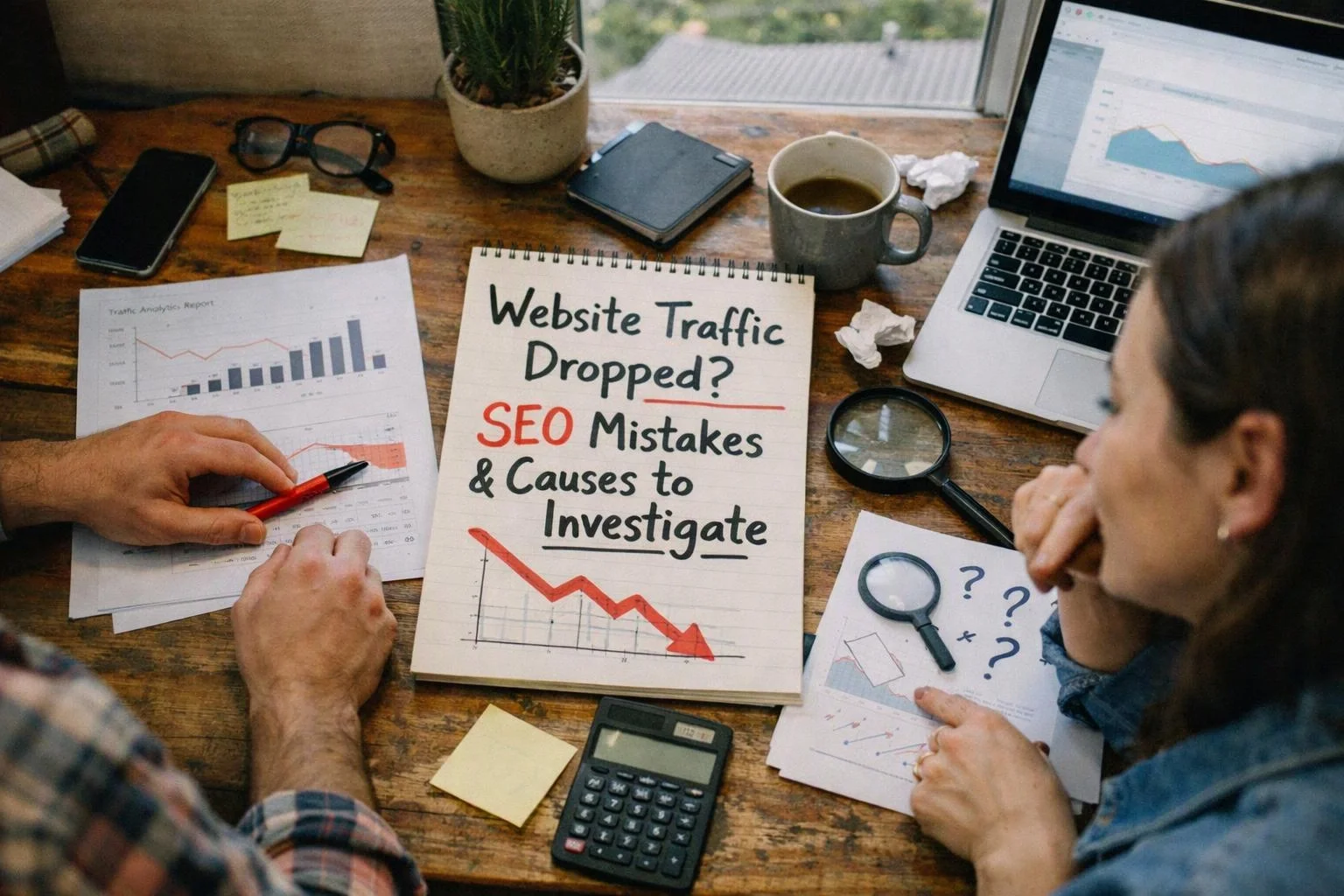
Website Traffic Dropped? SEO Mistakes and Causes to Investigate
Website traffic drops can result from indexing errors, technical changes, search algorithm adjustments, content problems, ranking losses or inaccurate analytics. At SEO-Ballarat.com.au, we investigate the evidence across Google Search Console, analytics, crawling, technical SEO and search results to identify the cause and recommend corrective work.
Why Did Your Website Traffic Drop?
A website traffic drop usually reflects a change in search visibility, website accessibility, content relevance, tracking accuracy or the mix of visitors reaching the site.
Website traffic can fall even when the website itself appears to be working. A change in Google Search visibility may reduce organic search clicks, while a tracking issue may only change what Google Analytics records.
We compare Google Search Console with Google Analytics to separate a real SEO diagnosis from a reporting problem. We also review search queries, landing pages, rankings and recent website changes.
How We Diagnose a Drop in Google Search Traffic
We diagnose a Google Search traffic drop by separating measurement problems from ranking, indexing, technical and content changes before recommending a fix.
Our process follows the evidence from the recorded visit back to the search result and the page that received the visit.
This approach helps us avoid treating every traffic decline as a content problem. A reliable diagnosis identifies the affected pages and the signal that changed.
SEO Mistakes That Can Reduce Website Traffic
SEO mistakes can reduce organic visibility when pages become difficult to crawl, less relevant to search intent or weaker than competing results.
Some traffic losses come from a single technical issue. Other losses develop when content, internal links, search rankings and website changes interact.
Blocking Important Pages from Crawling or Indexing
Blocked pages can lose search visibility when robots.txt, a noindex directive, a canonical URL or an XML sitemap prevents Googlebot from discovering or selecting the intended page.
This issue often follows a website release or a template change. We check indexing, crawl access, index coverage and the signals that identify the preferred URL.
The business cost is lost visibility for pages that support enquiries or sales. Our fix may include correcting robots.txt, removing an incorrect noindex directive, updating the canonical URL or repairing the XML sitemap.
Changing URLs Without Managing Redirects
URL changes can cause ranking loss when old addresses return errors or do not pass visitors and search signals to the correct new pages.
We check each 301 redirect for accuracy and look for redirect chains, broken links and outdated internal links. Poor redirect handling can weaken link equity from existing references.
The cost comes from lost visits, confused users and wasted authority. We map the old and new URLs, apply suitable URL redirects and validate the important paths.
Publishing Content That Does Not Match Search Intent
Content loses search visibility when the landing page does not meet the user expectations behind the search query.
We assess search intent, keyword targeting, content relevance and the action the page asks the visitor to take. A page can use relevant terms and still fail to answer the real question.
The business impact includes lower rankings, fewer qualified visits and weaker engagement. Our corrective work may restructure the page, clarify its purpose or create content that better answers the query.
Removing or Weakening Pages That Earned Search Visibility
Content pruning can reduce organic rankings when useful pages are removed, shortened or disconnected from the rest of the site.
We review historical performance, internal linking and topical coverage before recommending a change. A page with modest traffic may still support related pages through its relevance and links.
The cost is a loss of established search visibility and topic support. We preserve useful content, strengthen weak sections and reconnect pages where the evidence supports it.
Creating Duplicate or Competing Pages
Duplicate content and similar pages can make it harder for search engines to select the most relevant result.
We look for keyword cannibalisation, overlapping page purposes and inconsistent canonicalisation. Competing pages may divide internal links and send mixed relevance signals.
The cost is unstable rankings and weaker performance for the page that should attract the search. We clarify page roles, improve internal links and use the appropriate canonical URL where needed.
Introducing Technical Problems During a Website Change
A website migration or redesign can reduce traffic when JavaScript rendering, mobile usability, page speed or server errors prevent important pages from working properly.
We compare the old and new site structure, test rendered content and inspect technical responses. We also check whether mobile users and search crawlers receive the same important information.
The cost depends on how many pages and systems the technical issue affects. Our fix targets the underlying technical SEO failure and validates the corrected experience across relevant templates.
Losing Relevant Links or Search Reputation
Lost or broken backlinks can reduce the authority and relevance signals supporting important pages.
We review referring domains, link relevance and broken backlinks to understand whether a meaningful external reference disappeared. We assess the quality and context of links rather than treating every link as equal.
The cost is reduced support for pages that relied on relevant external references. Corrective work may restore valid destination URLs, improve page relevance or support useful outreach where appropriate.
Misreading a Google Search or Market Change
A Google algorithm update or change in search behaviour can alter search results without proving that the website contains an SEO mistake.
We compare ranking volatility, competitor visibility, seasonal demand and search demand before choosing a response. A fall across many sites may point to a broader search change, while a page-specific fall may point to a local issue.
The cost of a wrong diagnosis is unnecessary editing and delayed corrective action. We separate algorithm-related decline from technical, content and competitor changes before recommending work.
How to Separate a Tracking Problem from an SEO Problem
A tracking problem changes the recorded visits or conversions, while an SEO problem changes the website's search visibility, impressions, clicks or rankings.
Google Analytics can show a traffic decline when tags, consent settings or conversion tracking change. Google Search Console may still show stable organic clicks and impressions in that situation.
When both tools show a decline, we inspect landing pages, search queries, index coverage and crawl data. A difference between recorded visits and organic clicks can point to a tracking discrepancy rather than a ranking loss.
What to Check After Finding the Cause
After identifying the cause, we prioritise the affected pages, correct the underlying issue, validate the changes and monitor the relevant search and analytics signals.
Corrective action should address the source of the decline, not only the visible symptom. We record what changed so later performance data can be interpreted accurately.
We use the affected page type and the evidence behind the loss to set the order of work. Monitoring then shows whether the corrective action improved the original signal.
When Should You Ask SEO-Ballarat.com.au to Investigate?
Contact us when the cause is unclear, the drop follows a migration or technical change, important pages have lost visibility, or several SEO systems need to be checked together.
We can investigate the evidence before you make further changes that may hide the original cause. The situations below are good reasons to involve our team.
We focus on evidence that can lead to a practical fix. You can contact us through our contact page to discuss the issue.
How Our SEO Audit Supports Traffic-Drop Diagnosis
Our SEO Audits, Technical SEO and SEO Consulting connect traffic data with crawl, indexing, content and search-result evidence so we can identify the most plausible cause and define the corrective work; Free Estimates Available.
We examine Google Search Console and Google Analytics alongside crawl analysis, content analysis and the pages affected by the decline. This creates a joined view of the technical issue, tracking issue or search visibility problem.
Our recommendations explain what happened, which pages need attention and which validation checks should follow. Free Estimates Available for an initial discussion about the evidence and the work required.
Questions About Website Traffic Drops
Can a website lose Google traffic without losing rankings?
Yes, a website can lose Google traffic without a clear ranking loss when search demand, search result features or the mix of queries changes. Google Search Console can show whether impressions and clicks changed even when average positions appear stable.
How can I tell whether Google Search Console or Google Analytics is reporting the problem?
Google Search Console reports search impressions and organic clicks, while Google Analytics records visits and conversions based on tracking. A fall in Analytics with stable Search Console data points towards a measurement issue, while falls in both tools require an SEO investigation.
Can a website redesign cause an organic traffic drop?
Yes, a website redesign can cause an organic traffic drop when URLs, internal links, page content, redirects, rendering or indexing signals change incorrectly. We compare the old and new site structures to locate the affected pages.
Does a Google algorithm update always mean the website has an SEO mistake?
No, a Google algorithm update does not always mean the website has an SEO mistake. We compare competitor rankings, search behaviour, content relevance and technical signals before deciding whether corrective work is needed.
What should I preserve before changing pages that already receive organic traffic?
Preserve the page's useful content, URL, internal links, search intent and historical performance evidence before making changes. We review these signals so content improvements do not remove the qualities that supported existing search visibility.